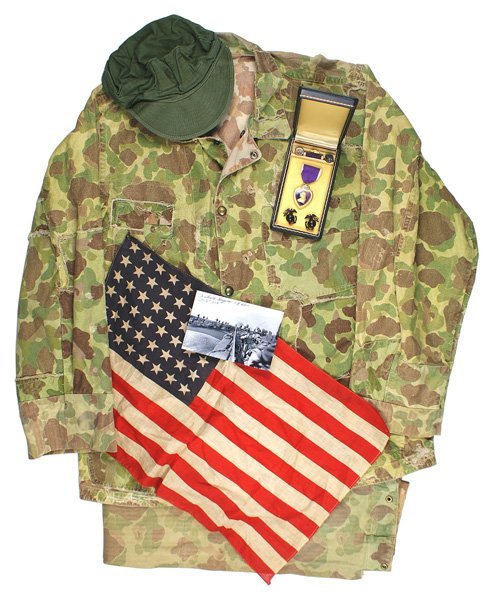
Auction results are a large part of the data an appraiser interprets to for their value conclusion – but they are far from the only thing!
In any first consultation with me, a client identifies the intended use of the appraisal, and together we determine the objective. These two things help me determine the most appropriate market or markets to search for sales and pricing data, whether for comparable sales, or prices of like items or reproductions.
The most appropriate market is where the items are most commonly bought and sold by buyers and sellers in full possession of all relevant facts about the items and under no compulsion to either buy or sell.
On top of all this is an item’s physical characteristics, and often enough in my corner of the appraisal world, a provenance that establishes additional historical significance. Both can have an effect on value.
So you see appraisals are a multi-faceted process with many moving parts! It takes a mind adept at compilation, interpretation, and interpolation of data to reach a justifiable value conclusion – far more than a simple search of realized prices!
A place for discussing appraisals, collecting, history, science, music, and everything in between.
Showing posts with label auction. Show all posts
Sunday, September 17, 2017
Sunday, April 16, 2017
About Your Stuff: Fact or Belief
Sometimes a client believes they know all about their item before they reach out to me for an appraisal.
Sometimes this information is the product of a generation or more of family members repeating - and sometimes adding to - the romantic lore around an item. Many times, though, they only have part of the story.
One of the hardest tasks I face as an appraiser and historian is telling someone their beloved story is only partially true or that the current market doesn’t support their assumption of value. The worst is when I have to contradict some deeply held or sentimental belief.
While there are many wonderful things about being an appraiser, one of the best moments for me is when I suspect that reality is even more interesting and windswept than family lore. Admittedly, such moments are rare. However, it’s always wonderful when I am able to tell them straight away and illustrate the point with physical evidence provided by the item itself.
Yet no matter what the news, there’s an art to informing a client gracefully.
Long before I deliver a report, though, comes the research phase. It is in this magical period, my favorite in fact, that I may discover a previously obscure historical aspect or component of the item about which my client had no clue.
It is in this ability to sniff out historical detail that I take especial pride.
It might be as simple as translating an obscure phrase, deciphering an unknown symbol or logo, tracing a signature or maker’s mark. Yet because such historiographical detail may add significant support or additional value to their item, it is vital to a complete and accurate appraisal.
As I always say, be certain of identity and value – call your appraiser!
Sometimes this information is the product of a generation or more of family members repeating - and sometimes adding to - the romantic lore around an item. Many times, though, they only have part of the story.
One of the hardest tasks I face as an appraiser and historian is telling someone their beloved story is only partially true or that the current market doesn’t support their assumption of value. The worst is when I have to contradict some deeply held or sentimental belief.
While there are many wonderful things about being an appraiser, one of the best moments for me is when I suspect that reality is even more interesting and windswept than family lore. Admittedly, such moments are rare. However, it’s always wonderful when I am able to tell them straight away and illustrate the point with physical evidence provided by the item itself.
Yet no matter what the news, there’s an art to informing a client gracefully.
Long before I deliver a report, though, comes the research phase. It is in this magical period, my favorite in fact, that I may discover a previously obscure historical aspect or component of the item about which my client had no clue.
It is in this ability to sniff out historical detail that I take especial pride.
It might be as simple as translating an obscure phrase, deciphering an unknown symbol or logo, tracing a signature or maker’s mark. Yet because such historiographical detail may add significant support or additional value to their item, it is vital to a complete and accurate appraisal.
As I always say, be certain of identity and value – call your appraiser!
Wednesday, March 29, 2017
A Bi-Partisan Assault: H.R. 544
Last September saw the introduction of H.R. 6234 by U.S. Representative Paul Cook (R - CA), titled “Private Corrado Piccoli Purple Heart Preservation Act.” It sought to make unlawful the sale of any Purple Heart medal, ribbon, button, or rosette, with penalties to include fines and imprisonment.
A revised version of the bill, H.R. 544 was introduced by Representative Cook on January 13, 2017, intended to amend title 18, United States Code, “to provide for the sale of any Purple Heart awarded to a member of the Armed Forces.”
The bill was referred to House Judiciary Subcommittee on Crime, Terrorism, Homeland Security, and Investigations on February 8, 2017.
The bill currently has 34 co-sponsors, including two Republicans from Kansas, Lynn Jenkins and Roger Marshall. There are no co-sponsors from Missouri. It is still unclear if or when this will be brought to a vote.
Frontlines
The circle of militaria collectors here in the US is more than a little alarmed. The thing is, the Purple Heart, Navy Cross, Air Force Cross, Silver Star, and a number of combat badges are already “protected.” There are, of course, enhanced penalties for the ultra-rare Congressional Medal of Honor.
At the heart of this is the increasing attention paid to “stolen valor,” which we most often think of as someone putting together a uniform and posing as a veteran, or someone claiming to have been awarded a decoration they did not earn. This is, of course, an issue that should not be taken lightly.
There have been around 1.8 million Purple Hearts awarded over the years, plus significant amounts of every one of the other decorations mentioned, including their ribbons, buttoniers, etc. I can’t begin to estimate the number of Purple Heart medals I’ve evaluated over the last 20 years. Each and every time I handle these items, I think about the service and sacrifice behind these awards - and wonder about the path they have taken to the secondary militaria market, whether by garage sales, tag sales, estate sales, thrift stores, flea market booths, public auction, and militaria shows. I also know the vast majority of those that collect, preserve and trade in militaria think about these things as well.
A Valuable Lesson - Personal Experience
My own family, at some point, sold, gave away or otherwise released my great uncle Wally’s (Pfc Wally Jones, 31st Infantry Regiment “Polar Bears,” Siberia 1918-1919) First World War medals, as well as other related service documents and photos.
While I am not a collector – at least beyond the odd three-dimensional item that helps illustrate lectures and presentations - I am an appraiser, so part of my job is to track militaria markets. About ten years ago, I found an auction record of Uncle Wally’s items – unfortunately about two months after they were sold. Given the family connection and my intense interest in the Great War, I was immensely disappointed and frustrated I couldn’t bring his things “back home.” But that’s the nature of things.
But I also know his things are being looked after and appreciated by a collector that will someday release them back into the market. I’ll be paying attention.
The vast majority of people that trade in militaria are not unscrupulous, vicious profiteers, money grubbers, deplorable human beings or any other pejorative term that politicians or overly-emotional members of the public assign them. Often they are veterans.
Ultimately they are the people that look after physical representations of a total stranger’s service that, all too often, descendants ceased to appreciate somewhere along the line and simply abandoned. Theft has simply not been that common.
Fallout: Unintended Consequences
I wholeheartedly support private efforts to “reunite” named medals of all types, the Purple Heart, Bronze and Silver Stars, the Legion of Merit, Distinguished Service Cross, Air Medal, whatever, with families that have had them stolen. I also support it for families that simply ceased to appreciate the medals, badges, uniforms, etc., and allowed them to be dispersed somewhere along the line - but are now ready to resume their stewardship.
But it’s important to remember that if the bill becomes law, the only jurisdiction would be the USA.
Of course, the first victims will be, ironically, the living recipients themselves, as this law would deny them the right to do as they wish with their decoration. The liberty their sacrifice was meant to protect will not be extended to the symbol of that sacrifice - as it has been for the previous generations.
It also will likely result in serious collectors of the higher-value name-engraved examples, i.e. those killed in action, to European or Asian auction houses, brokers, dealers, etc. There, the trade in named examples is already brisk.
One of the most sacred symbols of our history will simply leave the country, and Purple Heart recipient families, increasingly separated by multiple generations, which suddenly become interested in tracing their relation’s past will have to look far beyond our own borders to find the decoration.
Almost certainly, too, these same international auction houses, brokers, and dealers will exclude sale of the decorations to the US citizens or people with US addresses.
When thinking about the possibility of medal repatriation and reunion, we’re left to guess what form a special dispensation for purchase might take, but congress loves the chance to bureaucratize the unnecessary. Just as certain too will be those that will profit from guiding families willing to make their way through the bureaucratic maze, purchase the decoration and arrange for its return to the U.S.
There is also the ancillary concern of who is going to look after the medals discarded by disinterested families, banks or courts administering and liquidating the estates of deceased veterans with no heirs, etc.
Add to this the unnamed examples, which even a quick glance through secondary markets will reveal are many, will become a nuisance that may just as easily be remedied by quietly tossing them in the bin with the deceased’s remnant tie tacks, cufflinks, and expired AAA membership cards.
Numerous individual uniforms and estate groupings including the Purple Heart as a medal or ribbon bar that have been preserved by collectors across the secondary market for decades will now have to be stripped of the decoration and/or ribbon bar, leaving the physical representation of the man’s service incomplete and unable to tell its full story.
This, to me, seems the final injustice.
Conclusion: Gathering the Eagles
A collector’s personality is reflected in their collection. Most often, collections of militaria are assembled out of love, curiosity, and a deep desire to connect with and preserve the minutiae of the past.
Criminalizing the people that have looked after someone else’s history, sometimes for decades, while the recipient's family was off chasing their own dreams is well and truly deplorable.
If collectors or dealers make a few bucks along the way, that’s only fair. These people have, in the truest sense, been the custodians of a sacred aspect of the heritage and history of our country when those that should have been appreciative all along simply couldn’t be bothered.
I hope this misguided overreach quietly disappears.
A revised version of the bill, H.R. 544 was introduced by Representative Cook on January 13, 2017, intended to amend title 18, United States Code, “to provide for the sale of any Purple Heart awarded to a member of the Armed Forces.”
The bill was referred to House Judiciary Subcommittee on Crime, Terrorism, Homeland Security, and Investigations on February 8, 2017.
The bill currently has 34 co-sponsors, including two Republicans from Kansas, Lynn Jenkins and Roger Marshall. There are no co-sponsors from Missouri. It is still unclear if or when this will be brought to a vote.
Frontlines
The circle of militaria collectors here in the US is more than a little alarmed. The thing is, the Purple Heart, Navy Cross, Air Force Cross, Silver Star, and a number of combat badges are already “protected.” There are, of course, enhanced penalties for the ultra-rare Congressional Medal of Honor.
At the heart of this is the increasing attention paid to “stolen valor,” which we most often think of as someone putting together a uniform and posing as a veteran, or someone claiming to have been awarded a decoration they did not earn. This is, of course, an issue that should not be taken lightly.
There have been around 1.8 million Purple Hearts awarded over the years, plus significant amounts of every one of the other decorations mentioned, including their ribbons, buttoniers, etc. I can’t begin to estimate the number of Purple Heart medals I’ve evaluated over the last 20 years. Each and every time I handle these items, I think about the service and sacrifice behind these awards - and wonder about the path they have taken to the secondary militaria market, whether by garage sales, tag sales, estate sales, thrift stores, flea market booths, public auction, and militaria shows. I also know the vast majority of those that collect, preserve and trade in militaria think about these things as well.
A Valuable Lesson - Personal Experience
My own family, at some point, sold, gave away or otherwise released my great uncle Wally’s (Pfc Wally Jones, 31st Infantry Regiment “Polar Bears,” Siberia 1918-1919) First World War medals, as well as other related service documents and photos.
While I am not a collector – at least beyond the odd three-dimensional item that helps illustrate lectures and presentations - I am an appraiser, so part of my job is to track militaria markets. About ten years ago, I found an auction record of Uncle Wally’s items – unfortunately about two months after they were sold. Given the family connection and my intense interest in the Great War, I was immensely disappointed and frustrated I couldn’t bring his things “back home.” But that’s the nature of things.
But I also know his things are being looked after and appreciated by a collector that will someday release them back into the market. I’ll be paying attention.
The vast majority of people that trade in militaria are not unscrupulous, vicious profiteers, money grubbers, deplorable human beings or any other pejorative term that politicians or overly-emotional members of the public assign them. Often they are veterans.
Ultimately they are the people that look after physical representations of a total stranger’s service that, all too often, descendants ceased to appreciate somewhere along the line and simply abandoned. Theft has simply not been that common.
Fallout: Unintended Consequences
I wholeheartedly support private efforts to “reunite” named medals of all types, the Purple Heart, Bronze and Silver Stars, the Legion of Merit, Distinguished Service Cross, Air Medal, whatever, with families that have had them stolen. I also support it for families that simply ceased to appreciate the medals, badges, uniforms, etc., and allowed them to be dispersed somewhere along the line - but are now ready to resume their stewardship.
But it’s important to remember that if the bill becomes law, the only jurisdiction would be the USA.
Of course, the first victims will be, ironically, the living recipients themselves, as this law would deny them the right to do as they wish with their decoration. The liberty their sacrifice was meant to protect will not be extended to the symbol of that sacrifice - as it has been for the previous generations.
It also will likely result in serious collectors of the higher-value name-engraved examples, i.e. those killed in action, to European or Asian auction houses, brokers, dealers, etc. There, the trade in named examples is already brisk.
One of the most sacred symbols of our history will simply leave the country, and Purple Heart recipient families, increasingly separated by multiple generations, which suddenly become interested in tracing their relation’s past will have to look far beyond our own borders to find the decoration.
Almost certainly, too, these same international auction houses, brokers, and dealers will exclude sale of the decorations to the US citizens or people with US addresses.
![]() |
| General Colin Powell's tunic with his Purple Heart ribbon bar, scheduled for Auction, April 7, 2017 |
There is also the ancillary concern of who is going to look after the medals discarded by disinterested families, banks or courts administering and liquidating the estates of deceased veterans with no heirs, etc.
Add to this the unnamed examples, which even a quick glance through secondary markets will reveal are many, will become a nuisance that may just as easily be remedied by quietly tossing them in the bin with the deceased’s remnant tie tacks, cufflinks, and expired AAA membership cards.
Numerous individual uniforms and estate groupings including the Purple Heart as a medal or ribbon bar that have been preserved by collectors across the secondary market for decades will now have to be stripped of the decoration and/or ribbon bar, leaving the physical representation of the man’s service incomplete and unable to tell its full story.
This, to me, seems the final injustice.
Conclusion: Gathering the Eagles
A collector’s personality is reflected in their collection. Most often, collections of militaria are assembled out of love, curiosity, and a deep desire to connect with and preserve the minutiae of the past.
Criminalizing the people that have looked after someone else’s history, sometimes for decades, while the recipient's family was off chasing their own dreams is well and truly deplorable.
If collectors or dealers make a few bucks along the way, that’s only fair. These people have, in the truest sense, been the custodians of a sacred aspect of the heritage and history of our country when those that should have been appreciative all along simply couldn’t be bothered.
I hope this misguided overreach quietly disappears.
Wednesday, March 15, 2017
Klimt's "Bauerngarten" - A $59m "Trump Effect" Barometer?
Last month, I profiled the growing popularity of Gustav Klimt (Austrian, 1862-1918) among art collectors, along with the role one of his works has played in post-WWII art restoration.
The inspiration was the excitement surrounding the offering of Klimt’s Bauerngarten (Blumengarten), painted in 1907 near Lake Attersee, Austria, in the March 1st sale at Sotheby’s, London. The pre-sale estimate topped $45 million.
Animating the excitement - and set against a contracting market throughout 2016, was the hope, or some would say perception of a renewed optimism in the rarified air of the high-end art market, which has come to be known as the “Trump effect.”
Well, Bauerngarten did not disappoint, realizing $59 million with the buyer’s premium and other fees. It was sold to a German-speaking telephone bidder, one of four telephone bidders in fact, with two of the others thought to have been Asian collectors.
Sotheby’s had purchased the work before the auction from its previous owner, David Graham, and the sale was guaranteed by a third party’s ‘irrevocable bid.’
Complex arrangements like this are more common today, deployed to pull higher value works to the open market and away from private dealers who obviously represent an existential threat to international auction houses.
And not only was Bauerngarten a successful sale, but the strength of realized prices across Sotheby’s entire $239 million auction, alongside a sale at Christie’s the night before pointed to a confirmed sense of investor confidence in the art market.
After the sale, the co-head of Sotheby's Impressionist & Modern Art Department and chairman of Sotheby's Europe, Helena Newman, declared the evening "a statement on the momentum of the global art market in 2017."
The inspiration was the excitement surrounding the offering of Klimt’s Bauerngarten (Blumengarten), painted in 1907 near Lake Attersee, Austria, in the March 1st sale at Sotheby’s, London. The pre-sale estimate topped $45 million.
Animating the excitement - and set against a contracting market throughout 2016, was the hope, or some would say perception of a renewed optimism in the rarified air of the high-end art market, which has come to be known as the “Trump effect.”
Well, Bauerngarten did not disappoint, realizing $59 million with the buyer’s premium and other fees. It was sold to a German-speaking telephone bidder, one of four telephone bidders in fact, with two of the others thought to have been Asian collectors.
Sotheby’s had purchased the work before the auction from its previous owner, David Graham, and the sale was guaranteed by a third party’s ‘irrevocable bid.’
Complex arrangements like this are more common today, deployed to pull higher value works to the open market and away from private dealers who obviously represent an existential threat to international auction houses.
And not only was Bauerngarten a successful sale, but the strength of realized prices across Sotheby’s entire $239 million auction, alongside a sale at Christie’s the night before pointed to a confirmed sense of investor confidence in the art market.
After the sale, the co-head of Sotheby's Impressionist & Modern Art Department and chairman of Sotheby's Europe, Helena Newman, declared the evening "a statement on the momentum of the global art market in 2017."
Wednesday, April 20, 2016
Personal Property and Peace of Mind
In 2014, Consumer Reports published a handy flow chart outlining the process of dealing with personal property, or what they called “stuff.” And at the very top, directly beneath the first item, what do we find? “Get an appraisal.”
Seems simple enough, right? One of the more frequent calls I receive involves folks with “stuff.” Yes, stuff. But often they are unsure of what this stuff is – let alone its worth.
Sometimes the caller is managing an estate of stuff left behind by a relative. There may be other family members involved in overseeing its administration. Sometimes the family is in no hurry to deal with the stuff, other times the stuff has become an albatross, a time-sucking personal property stuff vampire that has raised tension between family members and just needs to be dealt with as swiftly as possible.
Other times it may be stuff the individual has collected but are now unsure of value. They know what they paid for the stuff, but they also (rightly) suspect that doesn’t really mean anything anymore.
Sometimes grand tales have been appended to the stuff, and a client is curious what effect it might have on the stuff’s desirability.
Of course they’re understandably hesitant during the call because they really don’t want to pay for a formal written appraisal on stuff that just isn’t worth it. And why should they?
In short, when they call me, they’re really looking for assurance and protection. They want to know they’ve done due diligence regarding the stuff by finding a professional to assist with discovery and identification.
They’re tired, overwhelmed, intimidated, or generally confused about their next step. Happily their challenge is not as big or daunting as they might believe!
My goal in this phase is to arm my clients with knowledge, perspective, options, and ultimately, peace of mind. I provide information about the items that will help the client with resolution, so they can confidently take their next step with the property, whether that involves liquidation, donation, equitable distribution, personal accession, or some other eventuality.
Now, appraisers like myself that work to maintain membership in professional appraiser associations like the International Society of Appraisers (ISA), American Society of Appraisers (ASA), or American Association of Appraisers (AAA), are “cap specific,” that is to say we define our role in any situation very precisely.
If I am acting as an appraiser, I am bound by a very specific code of ethics that does not allow me to wear multiple caps at once. For instance, I cannot be an authenticator and an appraiser at the same time. The conflict of interest is, I think, obvious. If you call an appraiser that offers to do both, hang up.
So, how are my services different?
As outlined above, I may serve as an appraiser or a consultant. As a consultant I can freely inspect a client’s stuff and search for pieces that might have a value worthy of further consideration, judged by whatever criteria the client has outlined. The reasoning may have nothing to do with monetary value.
What the client stands to gain from our association is security, confidence, peace of mind, and knowledge. The cost for this type of service is considerably less than a formal appraisal, and in some cases can even be credited toward a formal appraisal of items the client already had in mind, or have discovered along the way.
Is Donation Right For You?
Going back to the flow chart, one area that is underemphasized is charitable donation. This is an avenue that clients often find serves their interests more effectively than worrying over marketplaces they’re unfamiliar with.
Having worked the auction side in the past myself, they’re almost always up front with how afraid they are that an item being sold at auction for less than they believe it is worth, but they don’t have the time or patience to micromanage a consignment shop situation.
The fastest solution for these clients is to use the inspection process to:
- Discover the stuff they want to keep.
- Identify the stuff having what they deem to be significant value – again often regardless of monetary value.
- Consider the avenues for donation according to the highest and best use of their stuff.
- Order a USPAP-compliant donation appraisal on the remaining stuff for tax relief.
Now that we’ve worked our way through some options, let’s figure out what appraisers mean by USPAP-compliance.
If you’ve bought or sold a home, you have probably heard the property appraiser mention USPAP. This is because both real property and personal property appraisers use the same basic standards during the valuation process.
Now, we know risks associated with personal property are mitigated by having a formal appraisal. It follows that appraisals are vital to obtaining accurate and adequate insurance coverage, settling a claim, helping determine estate tax liability, documenting a charitable donation, aiding in equitable distribution, or even just in preparation for resale.
The fact is, more and more people are realizing, sometimes too late, that their basic homeowner insurance policies is not enough to cover their collection of antiques, artwork or artifacts. Other times items are shrouded in mystery and folks are simply curious about what they have, especially inherited pieces thought to have historical significance or special value. Accurate identification and valuation is vitally important because it almost always determines your next step in protecting the property.
You may have already had an appraisal on items, but the report is more than five years old. A updated report not only protects you with more accurate current numbers, but I am often able to append an even greater amount of detail and historical perspective to your items that will serve your future generations when they look back on the family heirlooms, as well as ensure that they will not be fooled by unscrupulous selling agents or auctioneers that might otherwise want to take advantage of holes in your knowledge about your own items.
But not all appraisers are equal!
There are three main professional appraisal associations operating in the USA, the International Society of Appraisers, the American Society of Appraisers, and the American Association of Appraisers. Members of each association are held to the highest standards and continually work to maintain their credentials within their association. When you do finally choose an appraiser or consultant, be sure they are a member of one of these three organizations.
You will hear those of us that are part of these professional appraisal associations talk about “Uniform Standards of the Professional Appraisal Practice,” or USPAP.
What are these standards and why are they important to an appraisal?
Think of them as quality control standards for appraising both real estate and personal property. In the United States they are administered by the Congressionally-authorized Appraisal Foundation. The IRS requires appraisals for their use to be USPAP compliant. Appraisers that are members of reputable associations like the ISA are required to maintain USPAP-compliance.
Whether you need a formal or verbal appraisal, or just basic advice, USPAP compliance is the truest indication of an appraiser’s seriousness and professionalism.
Create your own file or database with an inventory and photographs of your personal property. Include your original receipts and any pieces of provenance, no matter how seemingly small or insignificant. These can provide clues or act as evidence to a future appraiser that might help your valuation. Inspect your items frequently, and call a professional if things don't seem right.
If you have an artifact, antique, artwork, rare book, general collectible, or even an entire estate filled with different kinds of “stuff” – give me a call at (816) 289-5400 or send me an email, I’m ready to help!
For more information on USPAP, see my website: www.charleskeller.net
Labels:
AAA,
antiques,
Appraisals,
appraisers,
artifacts,
artwork,
ASA,
auction,
collectibles,
estate planning,
International Society of Appraisers,
ISA,
kansas city appraiser,
militaria,
sculpture,
taxes,
USPAP,
valuation
Subscribe to:
Posts (Atom)