Opened in 1946, the library is privately funded and is
"the world’s foremost independent research library devoted to science,
engineering, and technology."
It had been a while since I last visited and was reminded of
the fact when I found a story online about how Canadian comet hunter David Levy
had donated his observing logs to the library last September. How I missed
that, I don't know.
The library has seen several significant renovations since I
ast visited, including the William M. Deramus III Cosmology Theater, and an
expanded area for Special Collections and Rare Books.
I was chatting with the assistant librarian for the History
of Science about our both having attended the University of Virginia's Rare
Book School and endured the Principles of Descriptive Bibliography course, when
Bill Ashworth, instructor for the university’s History of Astronomy course I
took over 20 years ago, came by. I had not seen him since Dr. J.A. Stack's
memorial service at the library in 1997, and it was good to catch up.
Anyway, apart from getting a new library card, I wanted to
see David Levy's observing logs, which are now on display. I was very
pleasantly surprised to see his observing log from when he was eleven looked
very much like my own at that age. Of course he went on to become of the 20th
century’s most prolific comet hunters.
Perhaps the most famous of his discoveries was
Shoemaker-Levy 9, a comet that fragmented and crashed into Jupiter over the
course of six days in July 1994.
Here are some pics from the exhibit:
David Levy and Clyde Tombaugh
Find this post interesting? Click the dates and months on the Blog
Archive side bar to the right for more! Thanks for reading!
In the mid 1930's, noted writer, historian, and social commentator H.G. Wells, among the world's most famous men of letters of the day, teamed up with producer Alexander Korda and director William Cameron Menzies to produce what would become the world's most expensive film produced until the time, Things to Come (1936).
While Wells was present on set, his control over the film itself was far from complete. The film was, of course, produced for entertainment and not just for propagandizing in the name of Wellsism, although he believed the film served that end until his death in 1946. Cuts had been made by the time of release, and some scenes were simply not filmed. His novelization, or "treatment" of the script had been released a year earlier in 1935, complete with introductory notes, and offers a fuller picture of his intentions with this particular work.
In case you don't know, the story is of a catastrophic world war that collapses the world's economy and sends most areas back to a feckless feudalism governed by upstart warlords and despots. Redemption comes in the form of an international consortium of airmen intent on rebuilding a bigger, better, more orderly and peaceful world.
Interestingly, the location of the film never actually leaves one place, Everytown. But around the Mediterranean, a group of these airmen calling themselves Wings Over the World, unite under a common order opposed to war, greed and wasteful competition, and spread their gospel of international brotherhood through a miraculous "gas of peace." A space shot is planned, which upsets Luddites among Everytown's citizenry to the point of violence, and the film climaxes with the ultimate triumph of progress in using the tools of science to stretch out man's vision and presence among the stars, closing with trademark Wellsian philosophic soliloquy.
But getting back to the point of this post, H.G. Wells had seen Fritz Lang's view of a possible dystopian future in Metropolis (1927), and thought it "quite the silliest film." I happen to love it. But so put off by Lang's vision was he that when it was his turn some eight years later, his production notes included the admonition that the production crew take Lang's film as a blue print for what not to do. Wells described each character in good detail, but of course left openings for the costume department to "let their imaginations go." Regarding "The Boss" of Everytown, Rudolf the Victorious, played by the inimitable Sir Ralph Richardson, his description was thus:
The Boss can be a
heavy, brutish-looking man of the condottiere type. He is in a rough costume
between that of a boy scout, a Far West cowboy and a Cossack. A rosette is his
symbol and it is everywhere present’ the last degradation of the English Tudor
rose. He carries himself with a self-conscious swagger. … The salute is made by
standing up stiffly, hands by the side and nose in the air. No hand lifting. The producer should bear in mind that the
Boss is not intended to be a caricature of a Fascist or Nazi leader[emphasis
added]. He is as much South American or
Haytian or Gold Coast. He is something more ancient, more modern and more
universal than any topical movements. There is a big flag with a rosette behind
him.
But interesting it is to note that in the film, Rudolf's uniform, vaguely reminiscent of a German tunic, features the collar tabs of a German general, and shoulder boards of a German junior officer.
A case can be made that these accouterments are the province of the nominally apolitical German army, so was this a test of Wells's eye for detail played by the costumers, a happy accident, or a purposeful symbolic stab at the rising threat emerging from the heart of Europe? It is this that I will attempt to expand upon for an upcoming H.G. Wells Society publication.
Stills from Things to Come courtesy of The Criterion Collection.
Find this post interesting? Click the dates and months on the Blog
Archive side bar to the right for more! Thanks for reading!
My late father collected international police and law
enforcement related headgear, and by the time of his death in April 2015, had amassed a
respectable collection. His most exotic examples were a Baden Police spike
helmet (circa 1900), a plumed Italian Carabinieri (national military police), Thai royal
palace guard, Bahaman spiked pith helmet, and an NVA military police pith helmet.
Sometime around 2000 he also acquired at auction, by
accident – meaning he was mildly intrigued and happened to win it for the
minimum bid, a curious piece outside his usual law enforcement scope. At the
time of acquisition, its vague attribution was a Somali death squad helmet. My thought is that it was simply military hardware repurposed by a local militia. Skeptic
that I am, though, I’ve always wondered if a finer point may be put on it, and
on a whim the other night began to look into it.
First, the anatomy of the steel helmet: The shell is clearly
a stock Soviet M40 style. The liner rivets are copper, which some helmet
experts believe point to a North Korean origin, though I
cannot confirm it. This particular example lacks the liner, though traces of
the steel band remain.
The exterior is painted olive-grey with a light sand finish, and
features a striking yellow stenciled horned and pointy-toothed skull and bones.
The interior is heavily oxidized, but an Arabic number code “2 – 15” is visible
at the back inside rim.
So what of this Somali attribution? Well, let’s check the
historical record for clues. The “scramble for Africa” between European powers
in the late 19th century saw Britain appeal to Somali Christians,
which of course caused friction with their Islamic countrymen, leading them to
look to the Ottoman Empire for support.
A series of military victories led by Mohammad Abdullah
Hassan helped establish the Dervish state, though it had collapsed by 1920
after British bombardments. Enter Fascist Italy with its La Grande Somalia idea.
Italy consolidated political control over Somalia throughout
the 1920’s – though never ruling without instability, and by the time Mussolini
declared the Italian Empire in 1936, the Africa
Orientale Italiana – or A.O.I., it included Ethiopia, Eritrea, and, of
course, Italian Somaliland. By the end of 1940, Italy had pushed the British
out of British Somaliland and the East Africa Protectorate.
Of course with the collapse of Italian power during World
War II, the British regained British Somaliland and eventually conquered Italian
Somaliland, which became protectorates until the Potsdam Conference of 1949
granted Italy trusteeship over their old portion. Britain retained theirs until
1960.
Eventually disputes would lead to the Ethio-Somali War, also
known as the Ogaden War of 1977-1978, which is where I suspect this helmet came
from. In an odd twist of fate, the Soviet Union had been supporting both countries
– while the United States had been supporting Ethiopia. At the outbreak of
hostilities – when Somalia invaded Ethiopia, Somalia broke ties with the USSR
in favor of the USA, while the USA ceased its support of Ethiopia to side with
the Somalis – though not militarily.
Interestingly the USA stayed out of the conflict, which saw
Ethiopia and her allies, the Soviet Union, Cuba, and South Yemen take on Somalia
and her allies, Western Somali Liberation Front, China, and Romania – the
brutal authoritarian Nicolae Ceausescu being one to break with
Moscow’s official line when it suited him.
War crimes against civilians were committed by both sides, and the conflict only
ended when Somalia evacuated back across the border and a truce was declared –
though an insurgency continued by the Somali National Army and Western Somali Liberation
Front.
So, with both Ethiopia and Somalia having been given Soviet hardware at one
time or another, just whose side was this helmet on? I still
can't say for sure. Historical research can be like that. Could be Somalian, could be Ethiopian. But I’ll let you know if I ever figure
it out!
Did you find this post interesting? Click the dates and months on the Blog Archive side bar to the right for more! Thanks for reading!
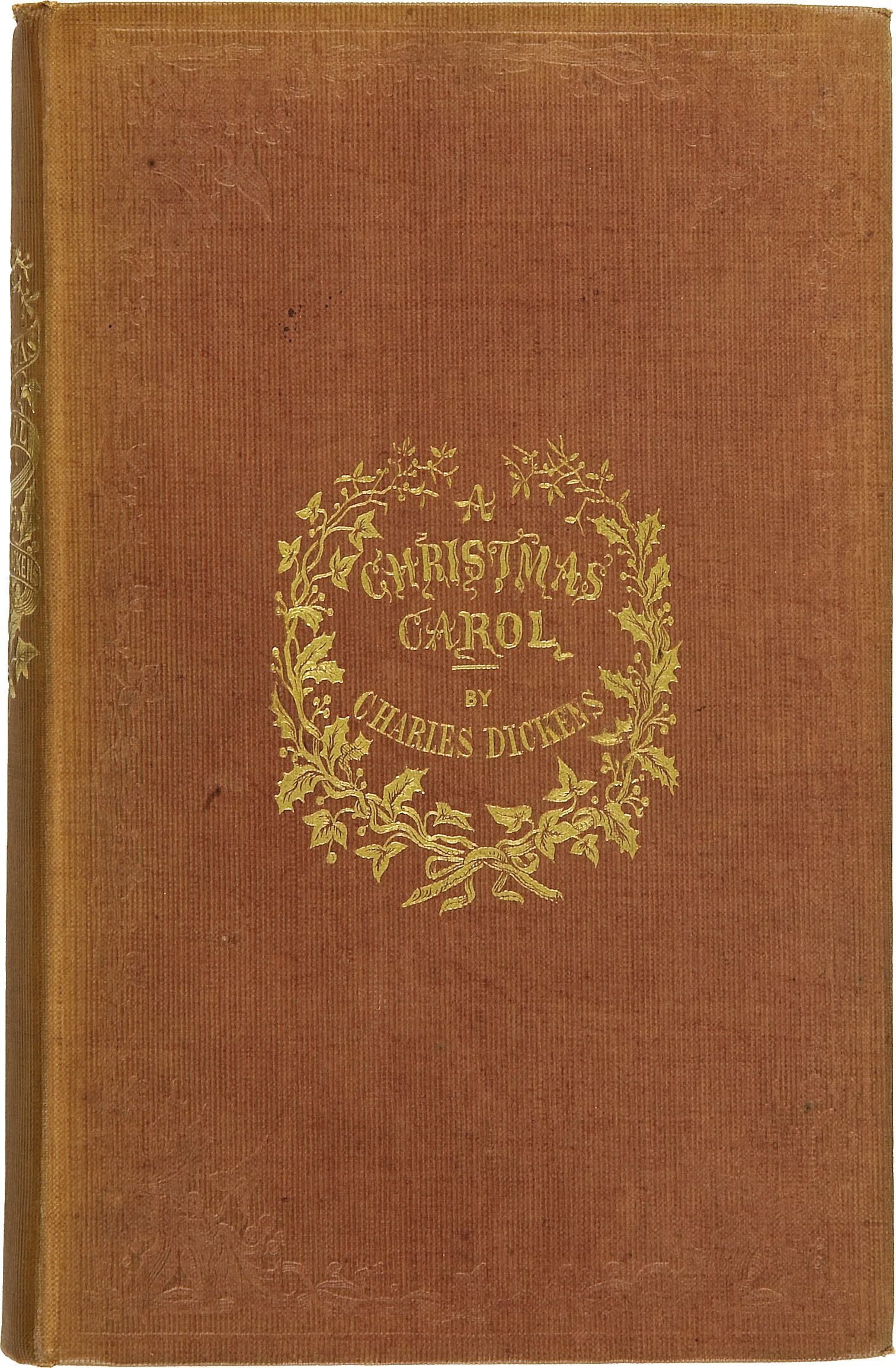
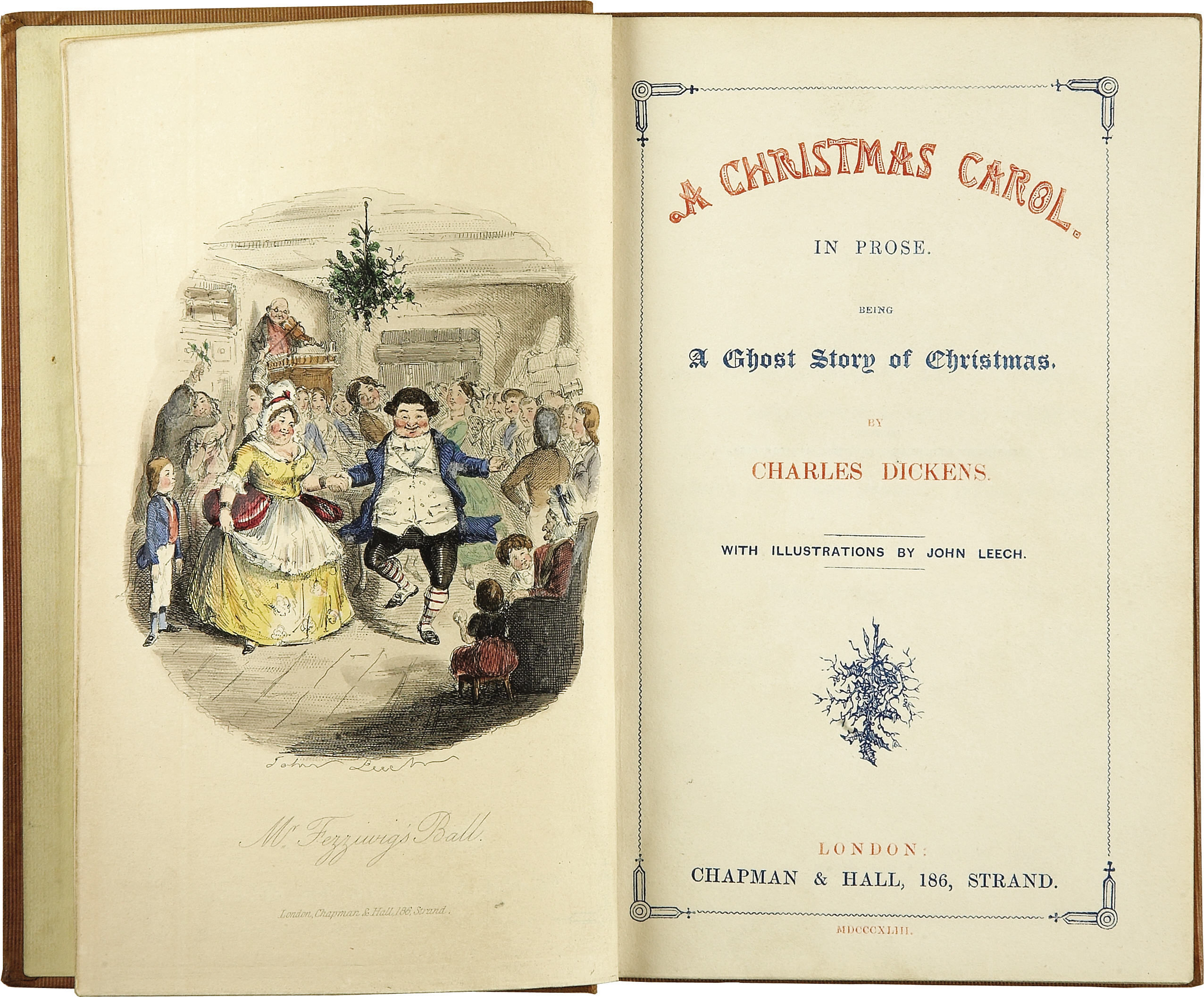
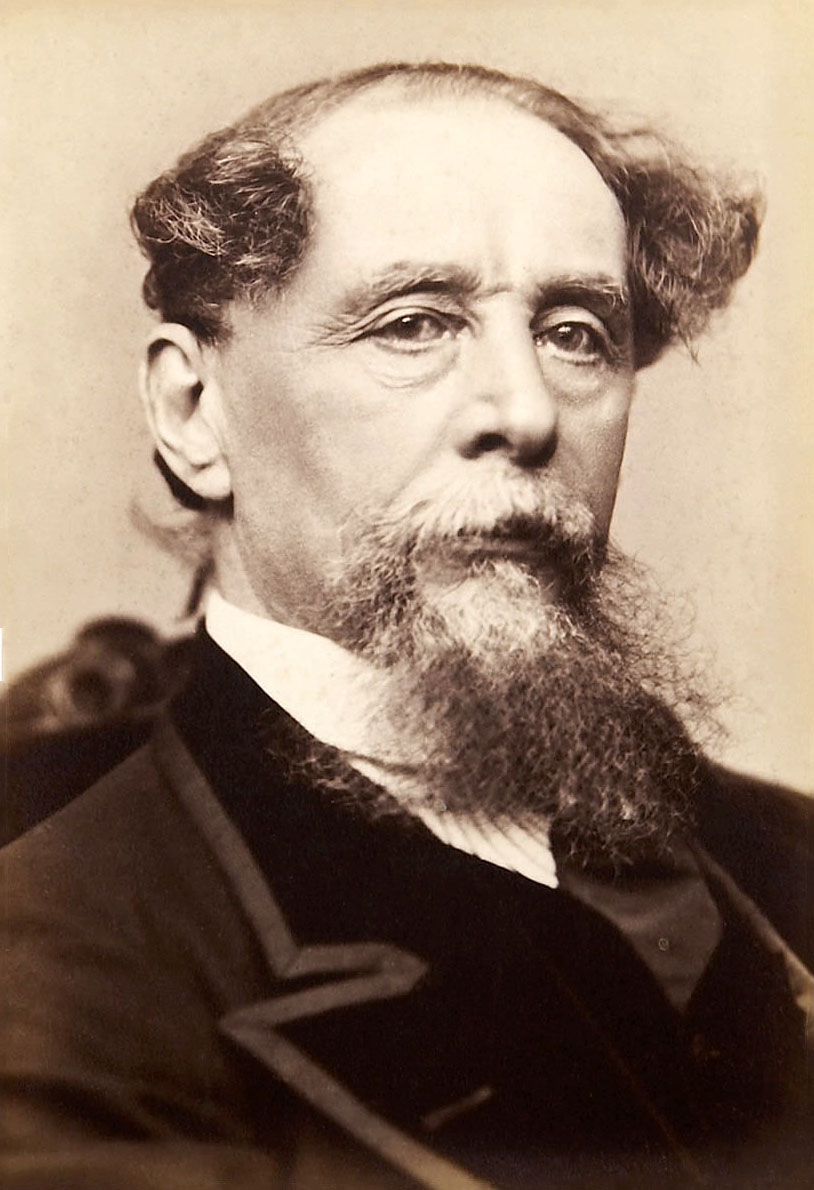
When Charles Dickens published his career-changing work in
December 1843, Christmas was not the major holiday we think of today. In fact
at that time it ranked somewhere beneath Easter in importance on the Christian
calendar. But a few things happened during the 19th century that
would propel the holiday to near preeminence.
Dutch settlers of New York considered St. Nicholas their
patron saint, and celebrated his day, December 6th, accordingly. On
St. Nicholas Eve, they hung stockings with the hope St. Nicholas would visit
and leave them presents.In 1809,
Washington Irving (1783-1859) published his satirical History of New York under the nom
de plume of Diedrich Knickerbocker. In it he fancied that St. Nicholas had
a wagon he could ride over trees and rooftops. By 1821 the Dutch word for St.
Nicholas, “Sinterklaas,” had been Anglicized into Santeclaus, thanks to an
anonymously published poem by William Gilley of New York. The stage was set.
In 1823, and essentially by accident, a poem by Clement
Clarke Moore (1799-1863) was published that would become one of the best-loved
English language poems, “A Visit from St. Nicholas,” or as most of us know it,
“The Night Before Christmas.”
And it was Moore that transplanted Santa’s visit and famous accompanying
nocturnal events to Christmas Eve, inventing along the way each of Santa’s
eight reindeer. By the time Dickens published his famous story, the poem was
published regularly by newspapers across the country every Christmas Eve.
But well before Thomas Nast drew a lasting image of Santa
Claus for the January 3, 1863 issue of Harper’s Weekly, Dickens smartly
encapsulated the Christmas spirit in a novella that was equal parts parable,
social criticism, and ghost story.
Published on December 19, 1843, the first edition of 6000
copies sold out that day. A further six editions comprising 7000 more copies
would be executed by the end of January 1844.
Dickens had begun composition in October of 1843, under
severe financial strain. A disagreement with his publisher led to him financing
the edition himself, and he ordered expensive binding, gilt edging, and four
hand-tinted illustrations by John Leech, all while insisting the price be kept
at 5 shillings, so as to allow just about anyone to afford it.
Variants among the first and second editions are most
numerous, with the earliest state of the first edition having green endpapers
and uncorrected errors in the text and table of contents. Scholars have long debated
various aspects of the editions and states, among them Richard Gimbel, Philo
Calhoun, Howell J. Heaney, and William B. Todd. The debate goes as far as using
measurements of the title and borders on the cloth front board to define an
edition and state.
Scholarly consensus regarding the anatomy and qualities of
the earliest editions may never come, but the timelessness of the story remains
beyond doubt!
Did you find this post interesting? Click the dates and months on the Blog Archive side bar to the right for more! Thanks for reading!
Okay. As a nine-year-old kid – and long before I learned to appreciate Stanley Kubrick and Arthur C. Clarke’s 2001: A Space Odyssey as the truest work of science fiction cinema possible, Star
Wars was a really big deal to me, and that’s putting it mildly. George Lucas was
a kind of film making god, on the level of George Pal. What Lucas said about
the Star Wars universe was not to be questioned because it simply had to be
true! How simple life once was.
We all know Star Wars fans can be an extreme and wonderful kind of crazy. In spite of knowing that universe
doesn't make perfect sense, some still try to
project order and make it make sense. Nutters, right? What many forget - or perhaps don't realize
in the first place - is that Lucas was merely emulating the gaudy, mawkish and
often politically ham-fisted '50s sci-fi serials he worshiped as a kid, though
armed with advanced film-making techniques of his time. Inconsistencies were
bound to turn up.
Yet the same sort of scrutiny and
vain attempts at rationalization happens with H.G. Wells' earliest novels.
Certainly I spent many hours of my youth going through The War of the Worlds
with a highlighter, notepad and army of almanacs in a vain effort to establish
the invasion year, hours in my school library pouring over maps of greater
London in an attempt to pinpoint where Martian cylinders landed, and of course tracing
the paths of the narrator and his brother. To this day fandom around The War
of the Worlds continues this tradition, reverse engineering Martian
fighting-machines, handling-machines, cylinders, all while humming the music
from Jeff Wayne’s musical version.
Of course Wells didn’t dream as he
wrote those early novels that they would eventually be scrutinized for practicality. To him they were parables, cautionary tales, social commentary
disguised as satire.
Eventually I discovered the
impressive body of literary criticism about Wells, with much attention given to
his early scientific romances. At the same time I was reading every biography
of him, not to mention his own autobiography, and learned and how and why these
novels reflected his contemporary social and political views.
Despite this lifelong hobby of identifying
and contextualizing Wells’s ideas, I’ve never had much interest in filling out
the Star Wars timeline or character subplots beyond the most casual
conversation. No, not everything in episodes IV, V and VI made sense. Episodes
I, II and III had some seriously cringe-worthy moments and characters, but I
was satisfied with the overall story the same way I am satisfied by a great
steak dinner. I feast on the meat and potatoes, and push aside the Ewok and Jar
Jar parsley.
So here we are on the eve of a new
era for the Star Wars universe. Beyond finding myself missing a lot of the
enthusiasm for these next chapters that I had for episodes I through VI, I feel
not a little bit of skepticism about them. Perhaps it’s because Lucas checked
himself out of the Skywalker universe and turned over the keys to the kingdom
to one of my generation, J.J. Abrams. Checking Abrams’ filmography on IMDb, I
realize I have only seen one other film listed among his credits – and seen by accident,
I have to admit, Cloverfield, a mindless sci-fi movie about a
monster wrecking New York City, as seen through the eyes of forgettable late
gen-X hipsters that I enjoyed seeing expire one after the other. The movie I thought
was enjoyable if viewed as a ‘couple of wasting hours of mindlessness.’ Abrams
was a producer, which gives me hope. Why?
My biggest worry has to do with
applying too much grime and realism to the Star Wars storyline. It’s a strange
worry I suppose given that I’ve never had interest in comic book super heroes
and tend to ignore the movies Hollywood churns out these days. The one
exception was the recent Christopher Nolan Batman trilogy. Of course part of
it could be sympathy for my son’s Batman phase which coincided with the movies.
I took him to see the last installment, The Dark Knight Rises, which
to my great surprise I enjoyed precisely because of its grimy appeal to realism.
That said, and as hypocritical as it
almost certainly is, I don’t think I’ll be able to tolerate much of that in the
new Star Wars movies. Give me another steak dinner and trust me to push aside the
parsley. It doesn’t all have to make sense. Lawrence Kasdan, a writer for The
Empire Strikes Back and Return of the Jedi, is directly involved in at least
the first of the new installments, so there’s a one place to pin my skeptic-tinged
hopes.
But above all, the biggest deal
breaker to me is if Luke Skywalker did or does turn to the dark side, an idea
that has Star Wars fandom abuzz. This simply cannot happen, as far as I’m
concerned.
So, too much realism and the new
installments will be regarded by me just as simple fan fiction.
Make Luke a Sith, and the ‘J.J.’ in director
J.J. Abrams’ name might as well stand for Jar Jar. And I say that knowing Jar
Jar Binks was recently mentioned by George Lucas as one of his favorite
characters. Ouch, now my head hurts.
This post was mostly off the cuff
and barely edited. It probably makes as much sense as Star Wars itself.
Did you find this post interesting? Click the dates and months on the Blog Archive side bar to the right for more! Thanks for reading!
Another exceptional lot brought to Sunflower Auction during
the summer of 2007 was this Union Army Civil War honor cross named to William A.
Throop. For context see my remarks preceding my post about the Jeremiah
Paul (American, ? - 1820) 'Washington Leaving His Family' oil on canvas from last June.
William A. Throop joined the 1st Michigan Infantry as a Second
Lieutenant and was mustered out on August 1861. Honorably discharged
1865.
Even before army corps cap badges were conceived by
General Daniel Butterfield, a Mr. E. Harmon had outlined a similar
system to the Secretary of War Simon Cameron in a letter dated August 2, 1861. Sir: I would respectfully invite your attention to a new
method of distinguishing the Federal troops from those of the rebels in
battle, of which I am the inventor.
It consists in the use of badges of
different colors or descriptions any one of which can be selected by the
commander previous to any engagement thus preventing the knowledge by
the enemy of the particular colored badge which shall be worn by our
troops so that they cannot be decoyed within the range of the enemy's
batteries as they were in the battle of Bulls run by the display of the
Federal flag. In other words the badge will answer the purpose of a
countersign addressed to the eye.
After General Butterfield made his similar recommendation to General Joseph Hooker in early 1863,
Hooker issued his March 21 Circular outlining "identifying cloth badges
for ready recognition" for each corps. Each Corps was assigned a
specific pattern, with classes designated by color. By the war's end, 23
of 25 army corps were officially recognized. Congress endorsed the
symbolic significance of corps badges in 1866 stating:
All persons who have served as officers, non-commissioned officers,
privates, or other enlisted men, in the regular army, volunteer, or
militia forces of the United States during the War of the Rebellion, and
have been honorably discharged from the service or still remain in the
same, shall be entitled to wear, on occasions of ceremony, the
distinctive army badge ordered for or adopted by the army corps and
divisions respectively in which they served.
Thus, battlefield insignia became a badge of honor and distinction.
Polished cast gold cannon cross, incised edges with inset black enamel-style
detail. Applied precious stones in smaller cannon cross form.
Obverse bears engraved battle honors: Occupation of Alexandra, Bull Run,
Chancellorsville, Aldie Gap, Gettysburg, Wapping Heights, Brandy
Station, Bristoe Station, Rappahanhock Station, New Hope Church,
Wilderness, Laurel Hill, Spottsylvania, North Anna, Tolopotomoy,
Bethesda Church, Siege of Petersburgh, Weldon RR.
Reverse bears engraved "1st Brigade, 1st Division, 5th Army Corps, Lt. Col. Wm. A.
Throop, 1st Mich. Infantry, 2nd Lieutenant, April 19th, 1861, Captain
Aug. 17th, 1861, Major August 30th, 1862, Lieutenant Colonel May 18th,
1863, Colonel December 22, 1864, Brev. Col. U.S. Vol August 1st 1864,
Brev. Brig. Gen. U.S. Vol. March 13/65"
Red silk ribbon with post-war added red leather reinforcement. Etched ivy on gold pin brooch
and bar. Includes Swiss-made red leatherette case with green silk lined
lid with gold printed maker "Blondel & Co., Geneva," purple velvet
form fitted interior.
Includes a fantastic original CDV of Lt. Col. Throop, wearing the badge on his chest.
Condition Report: Both excellent, the original ribbon is slightly discolored and mostly detached
Size: Cross 1.9 x 2 in. inclusive of suspension (4.8 x 5.1 cm.), CDV 4 x 2.5 in. (10.2 x 6.4 cm.)
Did you find this post interesting? Click the dates and months on the Blog Archive side bar to the right for more! Thanks for reading!
 After finishing an appraisal inspection in midtown Kansas
City a last month, I stopped by the Linda Hall Library of Science and
Engineering on the UMKC campus.
After finishing an appraisal inspection in midtown Kansas
City a last month, I stopped by the Linda Hall Library of Science and
Engineering on the UMKC campus.